
How to Avoid Burnout as an Safety Manager
December 16, 2024

As a safety manager, you play a lot of different roles. Every day, you’re a detective, problem solver, mentor, policy enforcer, and more.
Over my 42-year career, I spent much of my time strapped to a pager or some kind of electronic leash, always wondering did someone get hurt? That constant alertness is part of the job but can easily lead to burnout.
Balancing these responsibilities with your job needs a good plan. To help you, I’m sharing seven ways you can manage stress, prioritize tasks and find balance in your role.
Why do safety managers struggle with competing priorities?
The role of a safety manager is demanding, requiring you to balance multiple responsibilities with often conflicting priorities. Here are some common challenges you may face:
Urgent response vs. planned preventative activities
Your day likely swings between reactive tasks, like addressing incidents, and proactive efforts, such as conducting training or hazard assessments. The problem is that urgent issues often overshadow preventative measures, leaving little time to focus on the future.
Administrative tasks vs. field presence
While documentation is crucial, I’ve experienced how it can pull you away from being on-site, where the real safety culture is built, and where you can gain valuable insights.
It’s disheartening to feel like you’re moving further away from the work that brought you into the field in the first place.
Company-wide vs. site-specific needs
Balancing your organization’s safety goals with the unique needs of individual sites can create tension, especially when site-specific priorities conflict with broader company objectives, such as budget constraints that delay important safety investments.
Sometimes, I felt out of sync with my organization. I knew what needed to be done, but budget constraints or other corporate goals delayed critical safety measures. Balancing organizational safety goals with the unique needs of individual sites often created tension.
Engaging employees vs. being a “safety cop”
Finding the balance between enforcing safety protocols and maintaining employee trust is tricky. Focusing too much on enforcement can breed resentment, while focusing too much on engagement may lead to overlooked safety measures.
Deviations in behavior aren’t about being mischievous or belligerent. They simply make sense to the person in the moment. Convincing someone to act on something they’re not fully bought into takes significant effort, and over time, that struggle can lead to burnout.
High workloads and time pressure
With a growing list of responsibilities—compliance audits, inspections, training programs, and risk assessments—you often face overwhelming workloads and time pressure, making it hard to prioritize effectively.
How does workplace stress lead to safety manager burnout?
Workplace stress contributes to burnout when it becomes chronic, overwhelming, and difficult to manage. For safety managers, competing priorities, emotional demands, and constant responsibility for employee well-being make sustained stress hard to avoid.
Safety professionals are empathetic and caring by nature. But that empathy, coupled with limited leadership support and pressure to meet numbers, creates a perfect storm for burnout.
The problem arises when stress is left unmanaged. Too much stress is often the root cause of burnout. Burnout doesn’t happen overnight. It develops over time when stress becomes chronic and poorly addressed. For example, balancing office work and field work can be exhausting if tasks aren’t shared or prioritized correctly.
Poorly managing stress contributes to burnout in different ways. Not setting priorities or boundaries can make it feel like every task is urgent. This constant pressure can prevent recovery and make it hard to focus or make good decisions. High workloads, frequent interruptions, or unclear tasks can make the situation worse, reducing productivity and increasing feelings of helplessness.
For safety managers, the emotional side of the job can worsen burnout. Handling workplace accidents, injuries, or upset employees is emotionally draining, and without the right support or training, it can harm mental health. When stress is not handled properly, safety professionals may become disconnected, cynical, or doubt their ability to do their jobs well.
7 ways safety managers can prevent burnout
- Prioritize work using the Eisenhower Matrix
- Focus on high-impact activities with the Pareto Principle
- Delegate responsibilities whenever possible
- Collaborate with supervisors and frontline employees
- Set realistic expectations and boundaries
- Make time for recovery and personal well-being
- Use technology to automate routine work
What frameworks can safety managers use to prioritize work?
Safety managers can prioritize competing responsibilities by using structured decision-making frameworks such as the Eisenhower Matrix and the Pareto Principle. These frameworks help identify which tasks require immediate attention, which activities deliver the greatest impact, and which responsibilities can be delegated or deferred.
The Eisenhower Matrix
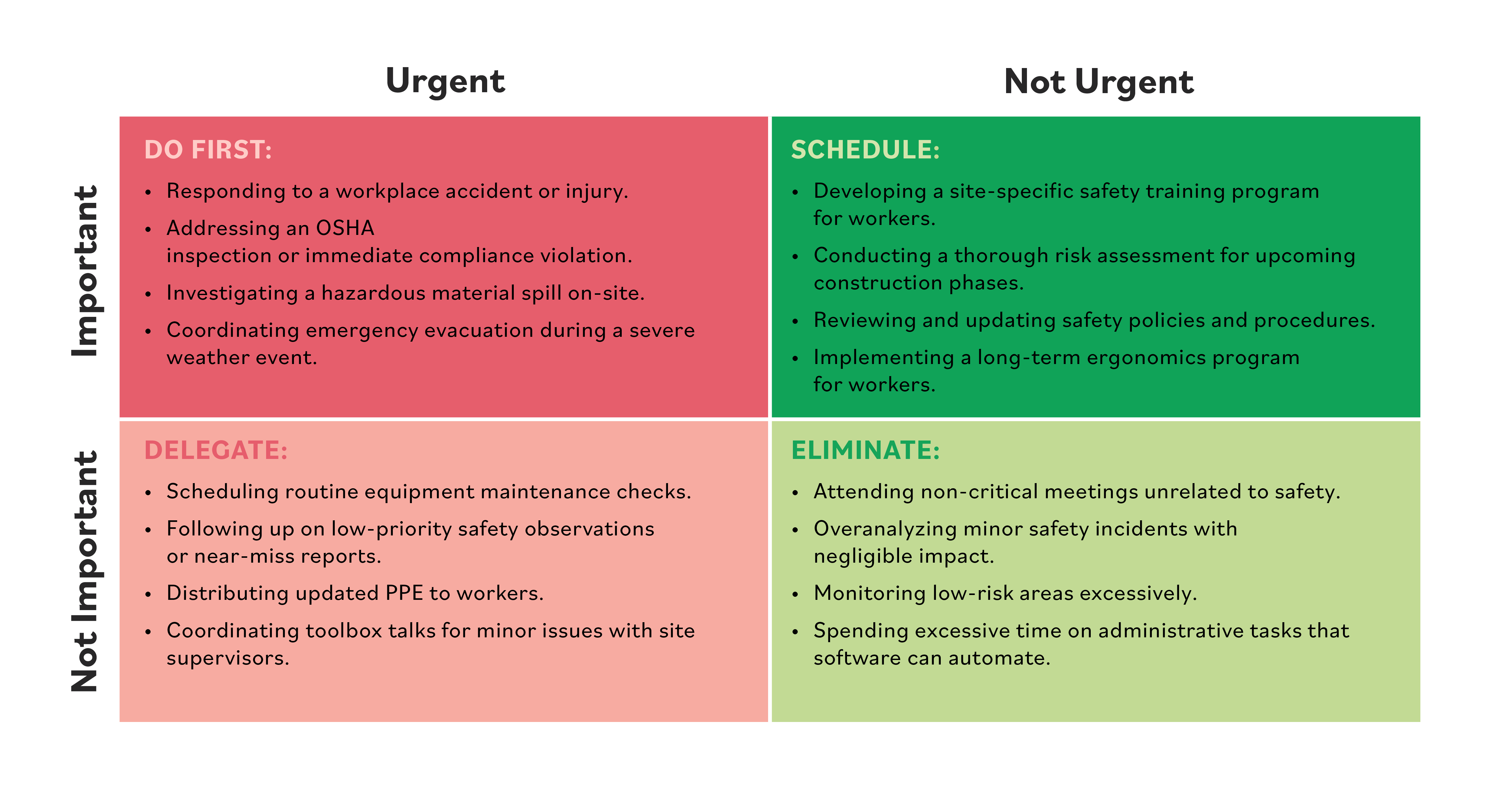
The Eisenhower Matrix sorts tasks into four categories:
- Urgent and important: Tasks requiring immediate attention. For example, addressing a major safety incident or resolving a critical compliance issue.
- Important but not urgent: Tasks that are vital but can be scheduled, such as developing a comprehensive safety training program or updating policies.
- Urgent but not important: Tasks that you can delegate, such as routine administrative work or follow-ups on low-risk maintenance issues.
- Neither urgent nor important: Tasks that add little value and you should eliminate.
The Pareto Principle (80/20 Rule)
The Pareto Principle states that 80% of your results come from 20% of your efforts. This principle is particularly effective for prioritizing efforts in safety initiatives where impact varies.
Here’s an example of how you can do this: Instead of spreading resources evenly across all hazards, focus on the activities that are responsible for the most workplace incidents. For instance, if slip-and-fall accidents make up most reported injuries, prioritize initiatives such as improving floor maintenance, adding anti-slip mats, and training employees on safe walking practices.
By focusing on the biggest risks, you can have a greater impact on overall safety performance.
These frameworks can help manage stress by creating structure and reducing the feeling of being overwhelmed. When safety managers know which tasks to tackle, which to delegate and which to defer or eliminate, they can work with greater confidence and efficiency.
What can safety managers do to prevent burnout?
When managing stress, consider how you spend your time at work and in your personal life.
Here are actionable steps to regain control and maintain balance in this demanding role:
- Delegate and collaborate: Build a team you trust and empower them to take ownership of specific tasks.
- Take care of yourself: Make time for activities you enjoy. This could be going to the gym, doing a favorite hobby, or taking 5 minutes during your workday to close your eyes and breathe slowly. If you can’t find 5 minutes, try setting a timer for just one minute. You will notice a difference.
- Optimize processes: Use technology to automate time-consuming tasks.
- Set realistic expectations: Focus on what’s achievable and align your goals with leadership priorities.
How can technology help safety managers reduce stress and work more efficiently?
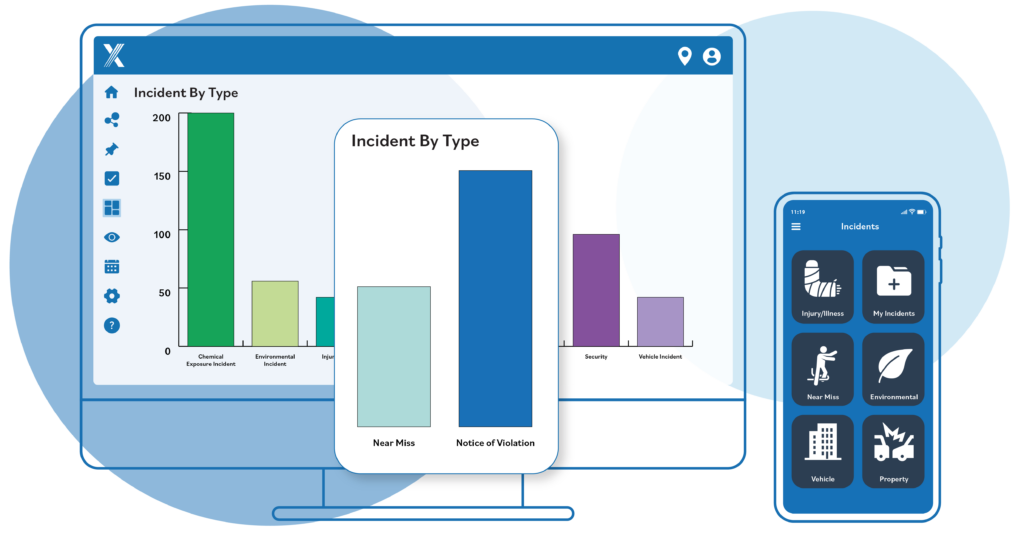
Technology helps safety managers reduce stress by automating administrative work, improving visibility into safety performance, and streamlining communication across teams. By spending less time on manual tasks, safety professionals can focus more on risk reduction, employee engagement, and strategic planning.
One of the biggest challenges I’ve seen is that while leadership genuinely cares about worker health and safety, their focus often stops at traditional metrics like TRIR and other lagging indicators.
An EHSQ platform like Intelex changes how company leaders think about safety by focusing on important indicators. With easy-to-use dashboards, leaders can see data from observations, inspections, incidents, and training hours. This gives them a quick and clear picture of safety performance. It shows that tracking proactive indicators is far more valuable than looking only at past data.
Key Intelex technologies include:
- Health and safety software: Automate compliance tracking, inspections and reporting to eliminate manual tasks, reduce errors and ensure compliance deadlines are met.
- Mobile apps: Improve real-time communication between field workers and managers for faster incident reporting, efficient task delegation and better visibility into field operations.
- Data dashboards: Consolidate key safety metrics for quick, actionable insights.
For more on how EHS management software can streamline your responsibilities, check out our guide: Convince Your Boss to Invest in EHS Management Software
How can safety managers build a sustainable career without burning out?
As a safety manager, protecting others starts with protecting yourself.
Preventing safety manager burnout starts with prioritizing effectively, managing stress, setting realistic expectations, and building systems that reduce unnecessary strain.
Moments of recognition helped reignite my passion for the field, even during challenging times. I remember a huge guy approached me at a festival and said, ‘I like all that safety crap you’re doing. Keep it up. You’re keeping us safe.’ Moments like that remind you why this work matters.
Remember: Small, consistent changes can have a big impact. By using tools and strategies to lower stress and build resilience, you can keep balance and make a positive impact on workplace safety.