
Same Program, Different Scorecard: The EHS-Leadership Alignment Problem
March 16, 2026
7 minute read

Senior leadership is more involved in EHS than ever. 63% of respondents in a recent survey say senior management actively supports EHS initiatives.
That’s a good sign.
But the way executives and EHS teams measure success still differs.
Executives often define safety success by outcomes — injury rates and lost-time incidents. EHS teams focus on leading indicators — training completion, near-miss reporting, and issue resolution rates.
This misalignment of ‘what good looks like’ can hurt credibility, make it harder to get investment, and weaken safety performance over time.
The latest Voice of EHS report reveals where these gaps exist, and how EHS leaders can better translate frontline performance into leadership-relevant outcomes.
Leadership engagement vs strategic alignment
For the Voice of EHS, we surveyed over 850 senior EHS leaders in North America and Europe.
The survey shows there is a real gap between how senior management and EHS professionals define success. Most leaders focus on reducing injuries (67%) and engaging the workforce (65%), while nearly half of EHS professionals (47%) see training completion rates as their main measure.
When executives are engaged, it means they are interested and visible in safety efforts. However, being visible does not mean everyone is aligned.
Leadership and EHS teams need to agree on what success looks like and how daily frontline work supports larger company goals. Without this shared understanding, EHS leaders may collect useful data that leadership ignores, while leaders keep asking questions that EHS metrics cannot answer.
Alignment is also critical for safety culture.
Leadership drives safety into corporate culture
Visible and supportive leadership is essential for making safety part of a company’s culture.
Shawn Galloway, CEO of ProAct Safety and a best-selling author, explains this clearly in our report Corporate and Safety Cultures: Working Better Together.
“An organization may mistakenly measure its excellence based solely on bottom-line results — that if injuries do not happen, then safety excellence exists,” Galloway says. He believes this view is too simple. It ignores the strategy and effort needed to reach and maintain safety excellence.
Brad Giles, president of the American Society of Safety Professionals (ASSP), gives a clear example of this in action. In Corporate and Safety Cultures: Working Better Together, he shares that at a previous employer, anyone wanting to become a supervisor, from foreman to senior executive, had to earn a Safety-Trained Supervisor certification from the Board of Certified Safety Professionals before being promoted.
“It’s not about regulations… how high a guardrail is or what angle a ladder is supposed to be at. It’s how you manage people,” Giles says. He believes effective supervision means acting as a safety consultant instead of a “safety cop.” This involves building people skills and engagement habits that make safety part of daily leadership, not just daily compliance. This shift from enforcement to engagement is where real cultural change begins.
But even organizations with visible, committed leadership can fall into a trap.
When executive priorities and frontline metrics do not share a common definition of success, the data EHS teams collect becomes less meaningful to those who fund and direct the program. Misalignment appears not only in culture but also in your data.
When misalignment shows up in your data
As Galloway points out, measuring safety excellence only by bottom-line results gives an incomplete picture. This approach does not consider the strategies, behaviors, and systems needed to achieve and maintain strong results.
If leadership only looks at injury rates while EHS teams track training completion and near-miss reports, a hidden problem develops. EHS professionals collect data that leadership does not review, and leaders ask questions that EHS data cannot answer. Both groups work hard, but neither informs the other.
Scott Gaddis, VP of Health and Safety at Intelex, calls this the “data trap” in his article Turning EHS Data Collection Into Meaningful Action — collecting lots of data without a shared purpose.
Dashboards fill up, audit logs grow, and spreadsheets multiply. But without agreement on what success means, metrics can’t become signals. This causes decision fatigue, missed early warning signs, and frontline workers who stop reporting because they never see their input lead to action.
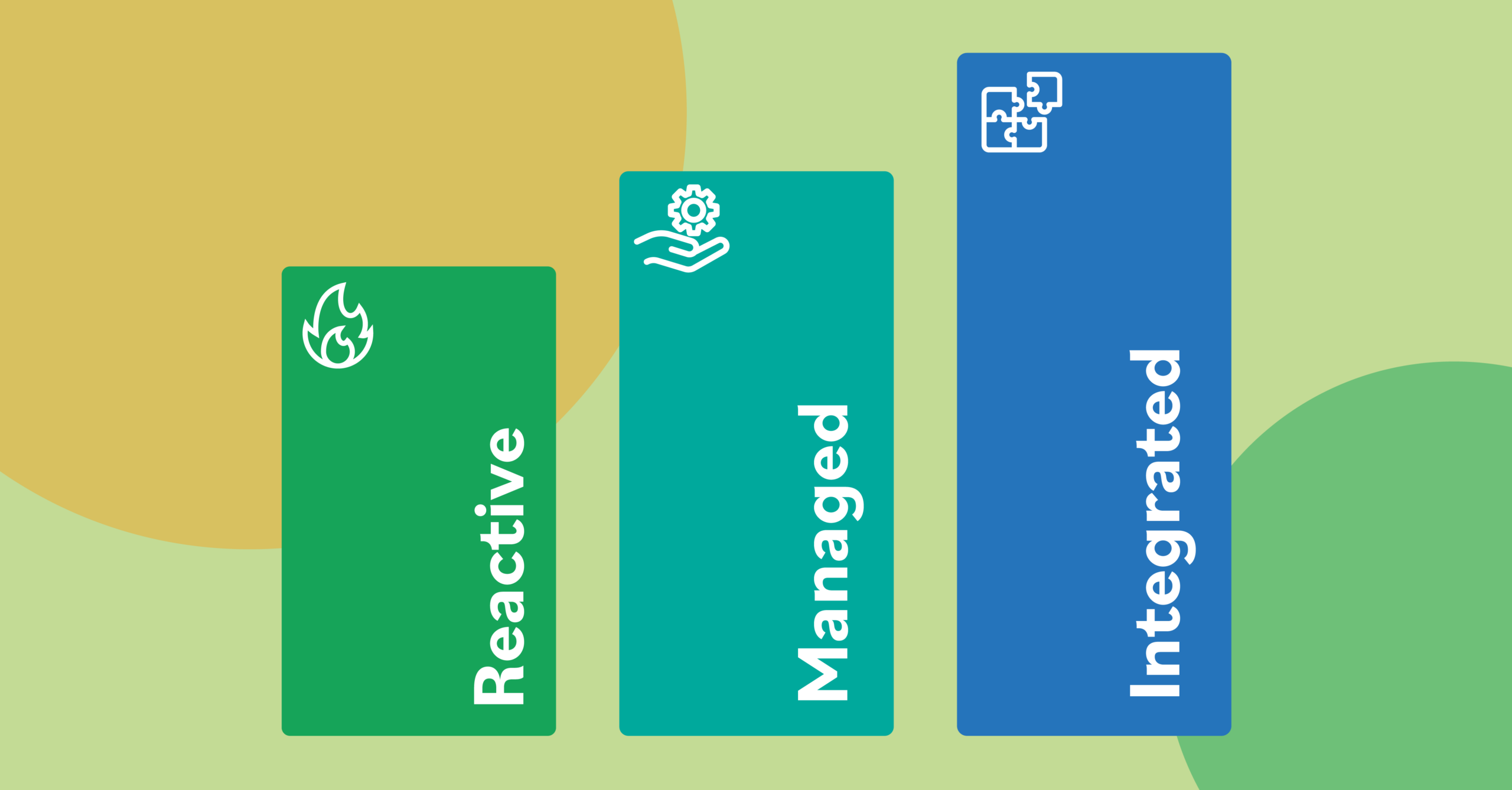
Gathering data is not the same as gaining insight. Insight helps explain why something happened, what it means, and what to do next. In safety, this difference separates organizations that only react to incidents from those that can anticipate and prevent them.
Why most safety systems make it worse and how to close the loop
The data trap continues in part because most safety systems are designed to collect information, not connect it.
Data is collected and reports are produced, but corrective actions do not always reach the people who raised concerns. Leading indicators rarely show up in the dashboards executives review. As a result, the loop stays open, and misalignment is reinforced by both the system and the culture.
Closing the loop means making sure that what EHS tracks at the frontline, like near misses, JSAs, audit findings, and training completion, leads to visible outcomes that leadership can act on. This requires both a cultural commitment and systems designed to make the process automatic.
Integrated EHS platforms can help, but only if the underlying metrics are aligned first. Automating a disconnect will just produce misaligned data more quickly.
When the foundation is right, a closed-loop system ensures that incident investigations update risk registers, audit findings trigger preventive measures, and corrective actions are tracked to closure instead of being filed away. Safety shifts from reactive reporting to a continuous improvement cycle that both frontline teams and executives can see and trust.
When leadership sets clear safety expectations at decision points and systems ensure follow-through on frontline input, alignment becomes a real part of daily operations instead of just a goal.
Related article: Closing the Loop: Why Safety Systems Fall Short and How Technology Can Fix Them
The alignment gap across industries
The alignment gap varies across industries. Voice of EHS data shows real differences in how executive engagement and EHS priorities vary by sector, and where the disconnect between leadership and frontline teams is greatest.
Manufacturing stands out for strong executive engagement. 73% of respondents rate leadership as highly engaged, compared to 63% overall.
ROI priorities reflect this maturity: workforce engagement leads at 85%, followed by better data (74%) and cost reduction (66%). Injury prevention ranks last at 64%, suggesting manufacturing leaders have moved beyond lagging indicators as their main measure of success.
Related article: [Manufacturing Edition] Voice of EHS Report: 2026 Trends and Priorities
Construction also shows strong engagement, with 79% rating leadership as highly engaged.
ROI measures are more evenly spread across workforce engagement, better data, time savings, and cost reduction. EHS teams in construction focus on training completion and quick issue resolution, highlighting an emphasis on operational throughput and safety outcomes.
Related article: [Construction Edition] Voice of EHS Report: 2026 Trends and Priorities
The energy sector tells a different story. Only 45% of energy executives are highly engaged in EHS, compared to 63% overall, and 46% are only somewhat engaged.
This suggests safety is less embedded in leadership culture. Injury prevention is the top ROI priority at 71%, while better data, time savings, and cost reduction are much lower than the overall sample. This pattern fits an industry still focused on lagging indicators, with less leadership investment in systems and metrics that support proactive performance.
Related article: [Energy Edition] Voice of EHS Report: 2026 Trends and Priorities
Aligning leadership and EHS
Organizations that close the gap between executive priorities and frontline metrics do so intentionally. They review what they measure and why, make sure leading indicators connect to outcomes that leadership tracks, and build systems that make frontline input visible across the organization.
For EHS leaders, the question is not whether leadership supports safety. In most organizations, that is already true.
The real challenge is whether everyone, from the frontline to the boardroom, shares the same definition of safety excellence.
Want to see what other priorities EHS leaders are focusing on in 2026? Get a copy of the Voice of EHS report.